The Invisible Threat to New Construction
When you’re starting a new construction project, termites probably aren’t the first thing on your mind. You’re focused on blueprints, budgets, and deadlines. But here’s the reality: termites can destroy your investment from the ground up—literally. They’re silent, relentless, and if you don’t address them during construction, fixing the problem later will be far more challenging and costly.
So how do you stop them? You need a termite prevention plan. Not just a quick soil treatment, but a comprehensive plan that considers the unique risks of building in Oman.
Why Termites Love Oman
Oman’s climate is perfect for termites. Warm temperatures, high humidity, and plenty of construction activity create ideal conditions for these pests. Subterranean termites, the most common type here, thrive in the region’s soil and can tunnel into buildings undetected. By the time you notice the damage, it’s too late.
This is why pre-construction termite prevention is critical. Once the foundation is poured, applying treatments retroactively becomes much harder and more expensive.
Step 1: Start with Soil Treatment
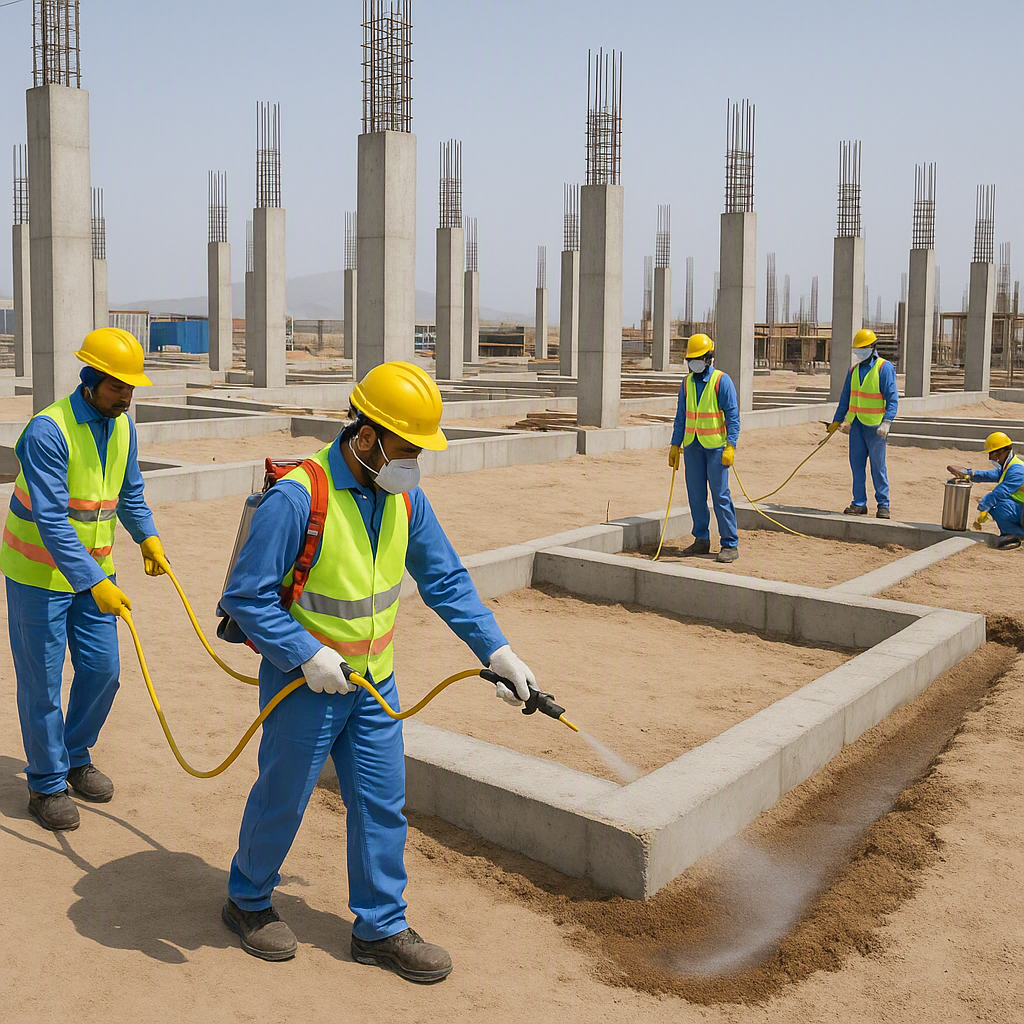
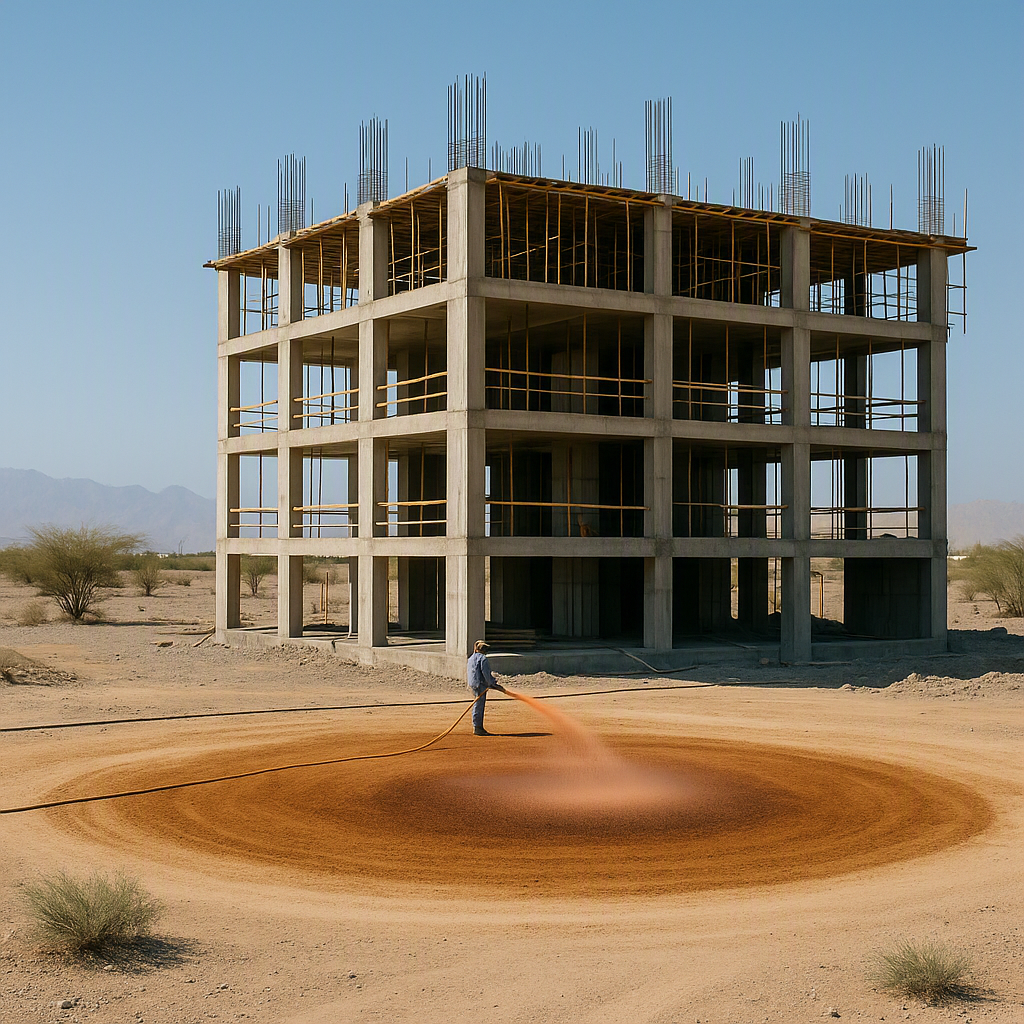
The first step in any termite prevention plan is treating the soil. Many teams see this as a box to check, but it’s not that simple. The soil acts as the primary barrier between termites and your building. If the treatment is poorly done—or skipped altogether—you’re leaving an open invitation for termites to move in.
Here’s what works:
- Choose the right chemical barrier: In Oman, Integrated Pest Management (IPM) methods are highly effective. They avoid over-reliance on harmful chemicals while still targeting termites.
- Apply it thoroughly: Incomplete coverage is a common mistake. The treatment needs to reach every square meter of the soil beneath and around the foundation.
- Time it right: The treatment should be applied just before the foundation is poured, ensuring the barrier remains intact during construction.
Step 2: Design for Termite Resistance
Your building’s design can either attract termites or keep them at bay. Simple changes during the planning phase can make a big difference. For example:
- Avoid wood-to-soil contact: Use concrete or steel for structural elements in contact with the ground.
- Install physical barriers: Stainless steel mesh or sand barriers can block termites from entering through gaps in the foundation.
- Plan for maintenance access: Make sure there’s enough clearance to inspect and treat areas like crawl spaces or slab edges later.
These steps aren’t just nice-to-haves—they’re essential. Skipping these details can lead to infestations within a short period of time.
Step 3: Ongoing Monitoring and Maintenance
Even the best prevention plan isn’t a one-and-done deal. Termites are persistent, and regular inspections are your best defense. In Oman, professional inspections are often included as part of long-term maintenance contracts.
What should you look for?
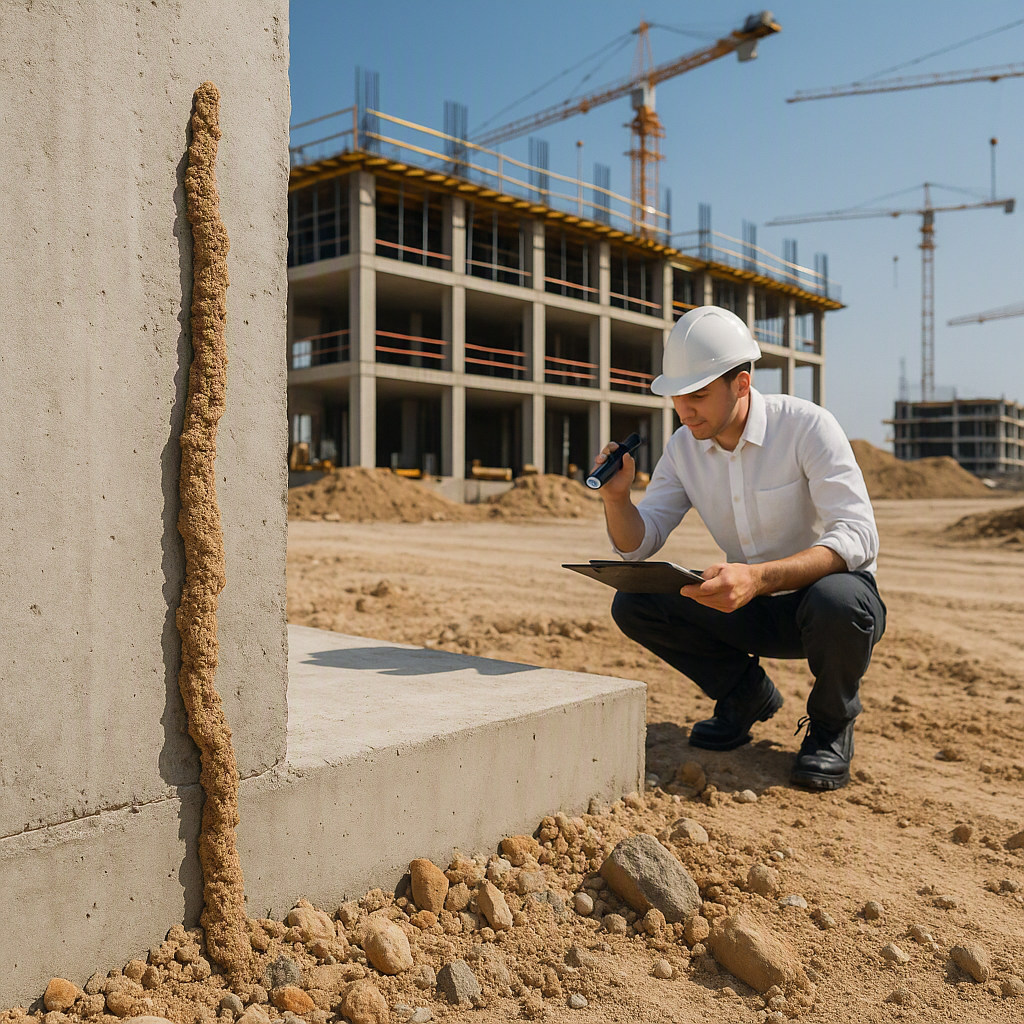
- Mud tubes: These are termite highways, often found along walls or foundations.
- Hollow wood: Tap wooden structures and listen for hollow sounds.
- Swarms: Winged termites are a clear sign of an active colony nearby.
Without regular checks, termites can sneak in unnoticed, even if the initial treatment was thorough.
Common Mistakes to Avoid
Let’s be honest: termite prevention isn’t glamorous, and it’s easy to cut corners. But those shortcuts will cost you. Here are the most common mistakes:
- Relying on DIY treatments: Off-the-shelf sprays might kill surface pests, but termites live deep underground. They demand professional-grade solutions.
- Skipping pre-construction treatment: Some teams think they can treat termites later if they show up. Prevention is always more effective.
- Ignoring warranties: Many termite control services offer warranties. These aren’t just paperwork—they’re a safety net.
What I’ve Learned
When I first started in this field, I underestimated how much planning termite prevention requires. I thought a single treatment would solve the problem. But after seeing projects where termites caused significant damage, I’ve changed my approach. Now, I always recommend a layered strategy: soil treatment, smart design, and ongoing maintenance.
It’s not flashy, but it works.
Ready to Protect Your Project?
If you’re dealing with termite risks, professional pest control services can help. From pre-construction treatments to long-term maintenance, a comprehensive plan can safeguard your investment.