Why Termite Risk Assessment Matters
Imagine this: you're overseeing a major construction project. The foundation is poured, the walls are going up, and everything seems on track. Then, months later, you find out termites have compromised the structural integrity of the building. Now you're dealing with expensive repairs, delays, and angry clients. Not ideal.
Termite infestations are a silent threat, especially in Oman, where the climate is warm and humid—perfect for termites. If you're a construction or real estate professional, you can't afford to ignore termite risk assessment. It's not just about avoiding infestations; it's about protecting your reputation and your bottom line.
Step 1: Site Inspection
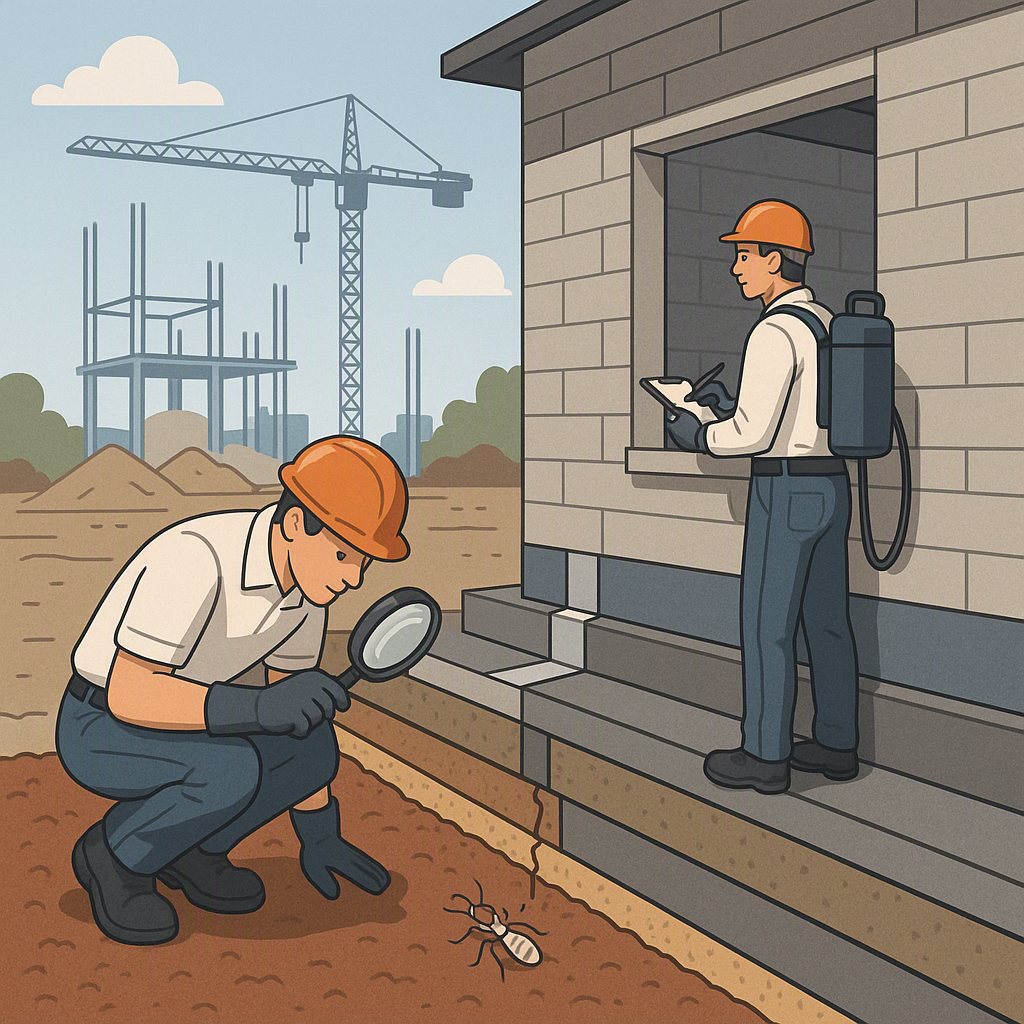
Start with a thorough inspection of the site. This isn't optional. Many teams skip this step or do a quick surface check, but that's a mistake. You need to dig deeper—literally.
What to Look For in a Site Inspection:
- Moisture Levels: Moisture attracts termites. Use a moisture meter to detect high moisture in the soil or surrounding materials.
- Wood Debris: Leftover wood from previous projects or natural debris can act as a food source for termites.
- Signs of Termite Activity: Look for mud tubes along walls, hollowed-out wood, or discarded termite wings.
- Soil Type: Sandy or loose soil is more prone to termite activity because it’s easier for them to burrow through.
In Oman, with its humid climate and varied soil types, moisture control is particularly critical. If you’re unsure, consider hiring a professional pest control team to perform a detailed inspection. For example, in the Muscat Governorate, some companies offer free evaluations to identify termite risk factors.
Action Steps for a Comprehensive Inspection:
- Use a flashlight and screwdriver to check wooden structures for hollowness.
- Inspect the foundation and surrounding areas for mud tubes and wood debris.
- Assess soil moisture levels with a handheld meter.
- Document all findings for reference in future assessments or treatments.
Step 2: Evaluate Construction Materials
What materials are being used in the project? Termites love cellulose-based materials, so untreated wood is an obvious risk. But did you know they can also chew through some synthetic materials? For example, cellulose insulation can attract termites if not properly treated.
Choosing the Right Materials:
- Pre-Treated Wood: Opt for pressure-treated wood that is impregnated with chemicals designed to resist termites.
- Non-Cellulose Materials: Use materials like concrete, metal, or steel wherever possible to reduce the risk of termite infestations.
- Composite Materials: Some modern composites are termite-resistant and can be used as an alternative to traditional wood.
Comparing Material Options:
| Material | Risk Level | Recommendation |
|---|---|---|
| Untreated Wood | High | Avoid unless treated with chemicals. |
| Pressure-Treated Wood | Low | Ideal for framing and structural use. |
| Concrete | None | Excellent for foundations and walls. |
| Cellulose Insulation | Moderate | Use only if treated to resist termites. |
| Steel/Aluminum | None | Perfect for structural elements. |
Action Steps:
- Work with suppliers to source termite-resistant materials.
- Verify material certifications for termite treatment.
- Educate contractors and subcontractors on material risks.
Step 3: Soil Treatment
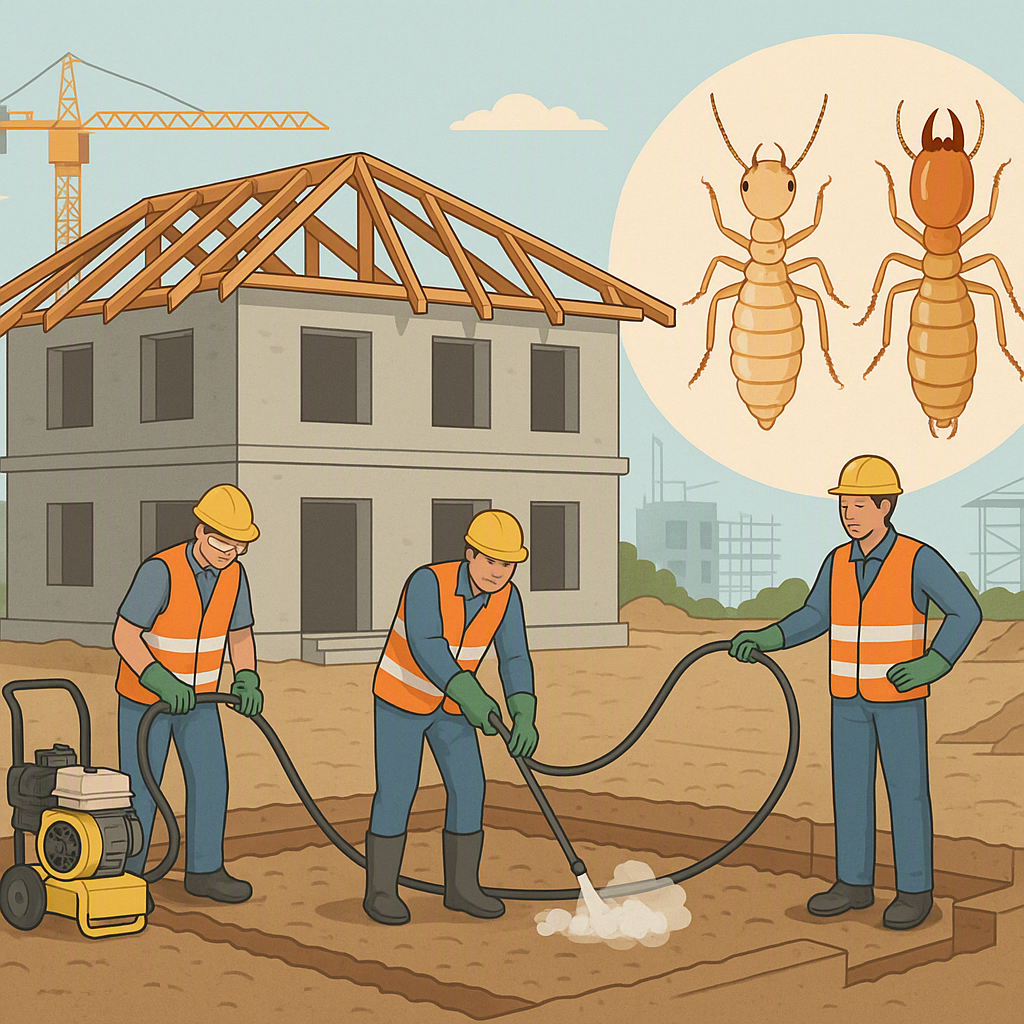
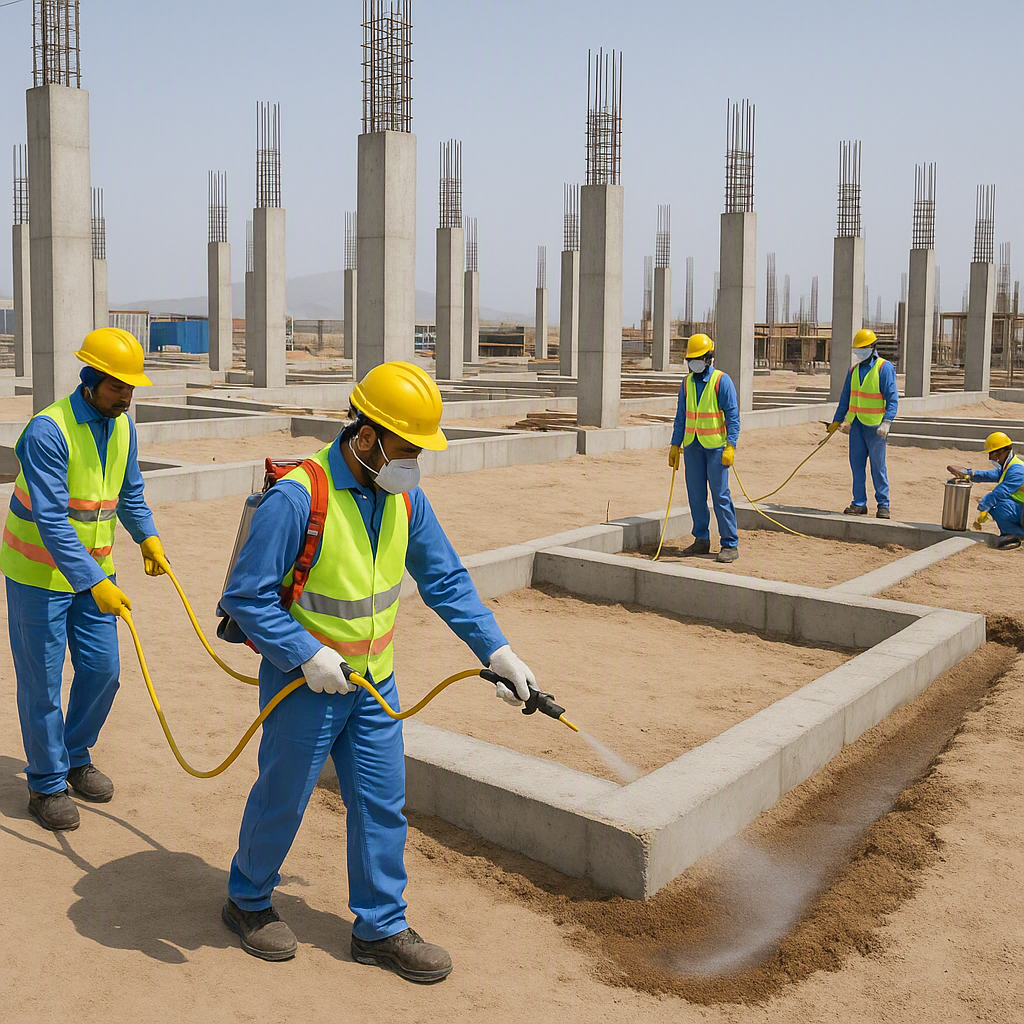
Soil treatment is the backbone of termite prevention, especially for new construction projects. This involves applying anti-termite chemicals to the soil before any building begins. Why? Because termites often invade through underground tunnels. Treating the soil creates a protective barrier that stops them before they reach the foundation.
How Soil Treatment Works:
- Barrier Creation: A liquid termiticide is applied to the soil to create a chemical barrier.
- Application Technique: The treatment must be applied evenly, covering areas around the foundation.
- Treatment Depth: Soil treatment typically penetrates at least 30 cm below the surface to ensure effectiveness.
Types of Termiticides:
| Type | Description | Environmental Impact |
|---|---|---|
| Liquid Termiticides | Applied to soil to form a barrier. | Moderate, depending on chemicals. |
| Bait Systems | Baits attract and poison termites. | Lower-impact alternative. |
| Non-Chemical Methods | Includes physical barriers like stainless steel mesh. | Eco-friendly but costlier upfront. |
Action Steps for Effective Soil Treatment:
- Hire licensed professionals for application.
- Ensure the treatment area includes the foundation, crawl spaces, and utility entry points.
- Use Integrated Pest Management (IPM) techniques to balance effectiveness with environmental safety.
Step 4: Monitor and Maintain
Even the best treatment won’t last forever. Termite control requires ongoing monitoring and maintenance. For real estate companies, this means regular inspections and possibly long-term maintenance contracts.
Monitoring Techniques:
- Regular Inspections: Schedule at least annual inspections to detect any new termite activity.
- Bait Stations: Install and monitor bait stations around the property. These act as an early warning system.
- Moisture Control: Fix leaks, improve drainage, and use dehumidifiers in crawl spaces.
Maintenance Best Practices:
- Develop a maintenance schedule that includes quarterly or annual checks.
- Train staff to recognize early signs of termite infestation.
- Renew soil treatments periodically as per manufacturer recommendations.
Common Mistakes to Avoid
- Skipping Pre-Construction Treatment: This is a classic error. Treating the soil after construction is far less effective.
- Underestimating Moisture Issues: High humidity isn’t just uncomfortable; it’s a termite magnet.
- Ignoring Long-Term Maintenance: Termite treatment isn’t a one-and-done deal. Regular check-ups are essential.
- Choosing the Wrong Materials: Using untreated wood or other cellulose-based materials increases the risk of infestation.
- DIY Treatments: Professional-grade treatments require expertise to apply effectively and safely.
FAQ
Q: Can termites really damage concrete structures?
A: While termites can’t eat concrete, they can exploit tiny cracks or gaps to reach wooden components inside the structure. This is why sealing cracks and treating adjacent soil is essential.
Q: How do I know if my site needs soil treatment?
A: If your site has high moisture levels, loose soil, or previous termite activity, soil treatment is strongly recommended. Even if these aren’t present, pre-construction treatment is generally a safer option.
Q: Is termite treatment harmful to the environment?
A: Modern Integrated Pest Management (IPM) techniques minimize environmental impact by using targeted chemicals and eco-friendly practices. Some treatments, like bait systems, are even less invasive.
Q: How often should I schedule termite inspections?
A: Annual inspections are a minimum requirement. In high-risk areas like Oman, bi-annual inspections may be more appropriate.
Q: Can I handle termite prevention myself?
A: While minor monitoring tasks can be done in-house, comprehensive termite prevention and treatment require professional expertise to ensure effectiveness and safety.
What Now?
If you’re dealing with termite risk—or want to prevent it—our team at Termite Control in Oman can help. We offer professional inspections, anti-termite treatments, and long-term maintenance solutions to safeguard your property. Don’t wait until it’s too late—Get started today →