Not All Pest Control Companies Are the Same
Here’s the thing about pest control: it’s easy to do wrong. You call a company, they show up with sprays and chemicals, and for a while, the termites disappear. But six months later? They’re back, and you’re stuck wondering if you wasted your money.
This isn’t just a homeowner problem. Construction and real estate companies in Oman deal with it too, especially in new developments. Termites aren’t just a nuisance—they’re a structural risk. When they get into foundations, walls, or wooden elements, they can cause damage that’s expensive to fix. And let’s be honest: in the construction business, reputation matters. Who wants to sell a building that’s already under attack?
The question is, how do you find a pest control company that actually solves the problem instead of just pushing it down the road?
What to Look For in a Pest Control Company
If you’re serious about protecting your property or project, here’s what matters:
1. Specialization in Termites
Termites aren’t like ants or cockroaches. They live underground, eat through wood from the inside, and are almost invisible until the damage is done. General pest control services often lack the expertise to deal with these pests effectively. Look for companies that specifically offer anti-termite treatments and can explain their methods in detail.
Actionable Steps:
- Ask if the company uses termite bait systems or liquid termiticides.
- Check if they use advanced detection tools, such as moisture meters or infrared cameras, to locate termite colonies hidden underground or inside structures.
- Request specific examples of their termite treatment process to confirm their expertise.
2. Long-Term Solutions
A one-time spray won’t cut it. Termites are persistent, and effective pest control requires treatments designed to last for years. Companies that offer warranties—sometimes up to 10 years—demonstrate their confidence in solving the problem permanently.
Actionable Steps:
- Ask what kind of warranty they offer and read the fine print. Coverage for re-treatments should be included.
- Confirm whether their treatments target the entire colony or just the visible areas.
- Evaluate their maintenance or follow-up plans to ensure long-term effectiveness.
3. Integrated Pest Management (IPM)
Integrated Pest Management isn’t just a fancy term. It’s a smarter approach to pest control that combines prevention, monitoring, and targeted treatments. Rather than relying solely on chemicals, IPM considers environmental factors that attract termites, blocks their entry points, and uses the safest methods possible.
Actionable Steps:
- Confirm whether the company uses IPM principles and ask them to explain their approach.
- Check if they evaluate structural vulnerabilities, such as wood-to-soil contact or moisture issues, as part of their inspection.
- Verify that their treatments are safe for humans, pets, and the environment.
4. Experience with Construction Projects
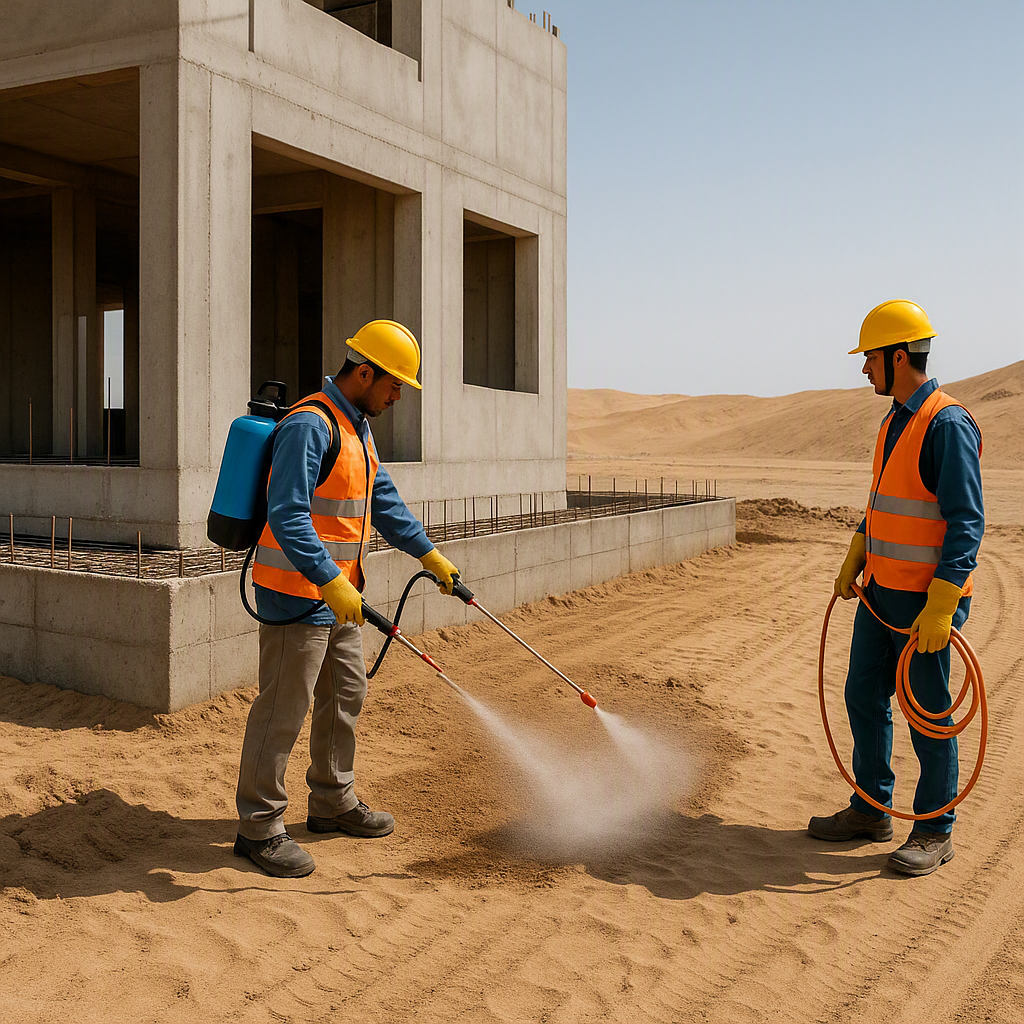
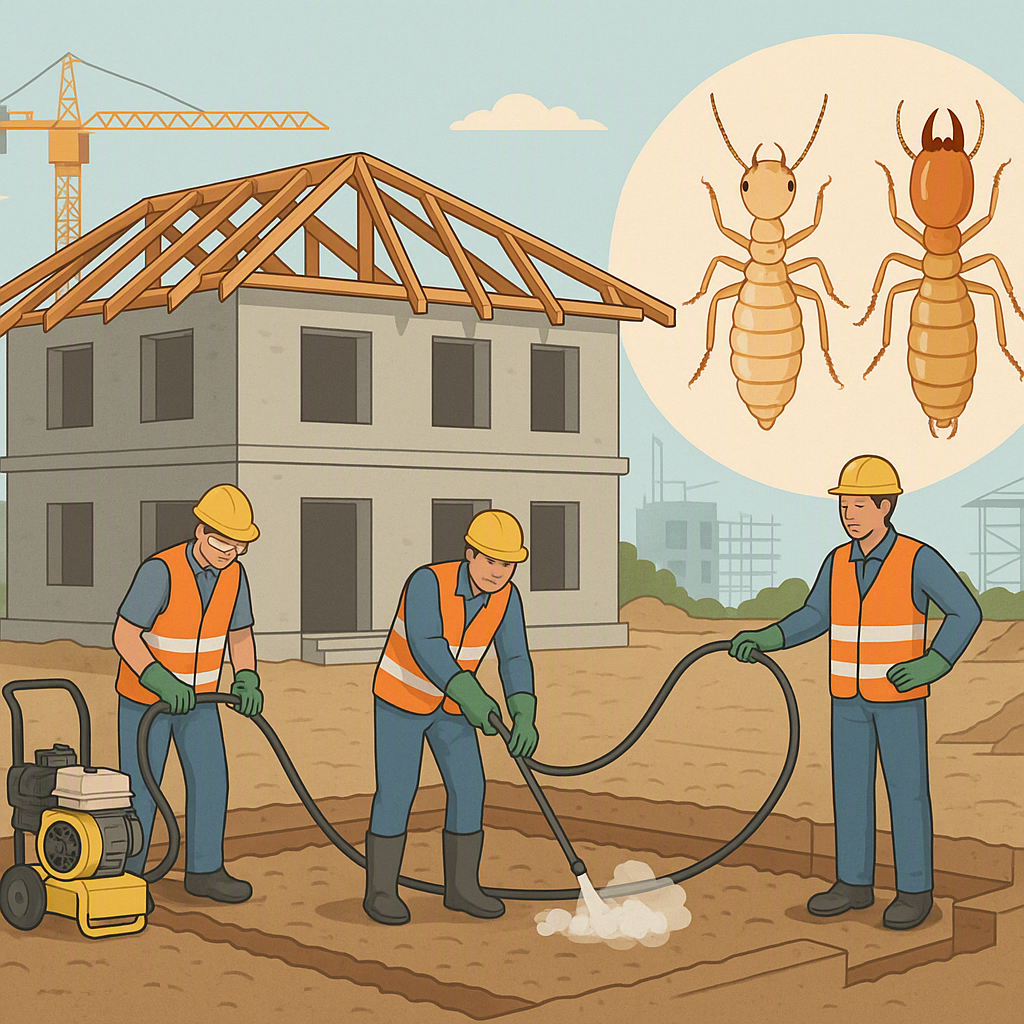
Pre-construction termite treatment is critical. It’s much cheaper and more effective to treat the soil and foundation before you build than to deal with an infestation later. Companies with experience in construction projects understand how to integrate pest control into building timelines without causing delays.
Actionable Steps:
- Ask if the company has worked on large-scale construction projects and request references.
- Verify that they treat the soil before foundation work begins and ensure protection lasts through the building’s lifespan.
- Confirm that they follow local building codes and pest control regulations.
5. Local Knowledge
Termite behavior varies depending on the region. For example, in Oman’s arid climate, subterranean termites are more common, and treatments must account for specific soil types and environmental factors. Companies with local experience are better equipped to handle these challenges.
Actionable Steps:
- Ask how the company’s methods are tailored to Oman’s climate and soil conditions.
- Verify that their products and procedures are designed to withstand local environmental pressures.
Why Many Pest Control Services Fall Short
It’s tempting to think all pest control companies are the same—they use similar chemicals, right? Unfortunately, that’s far from the truth. Here’s why many services fail:
Quick Fixes Instead of Long-Term Solutions
Some companies prioritize short-term treatments to save costs. They spray visible areas but fail to reach the underground termite colonies where the real problem lies. This gives homeowners and businesses a false sense of security.
Skipping Inspections
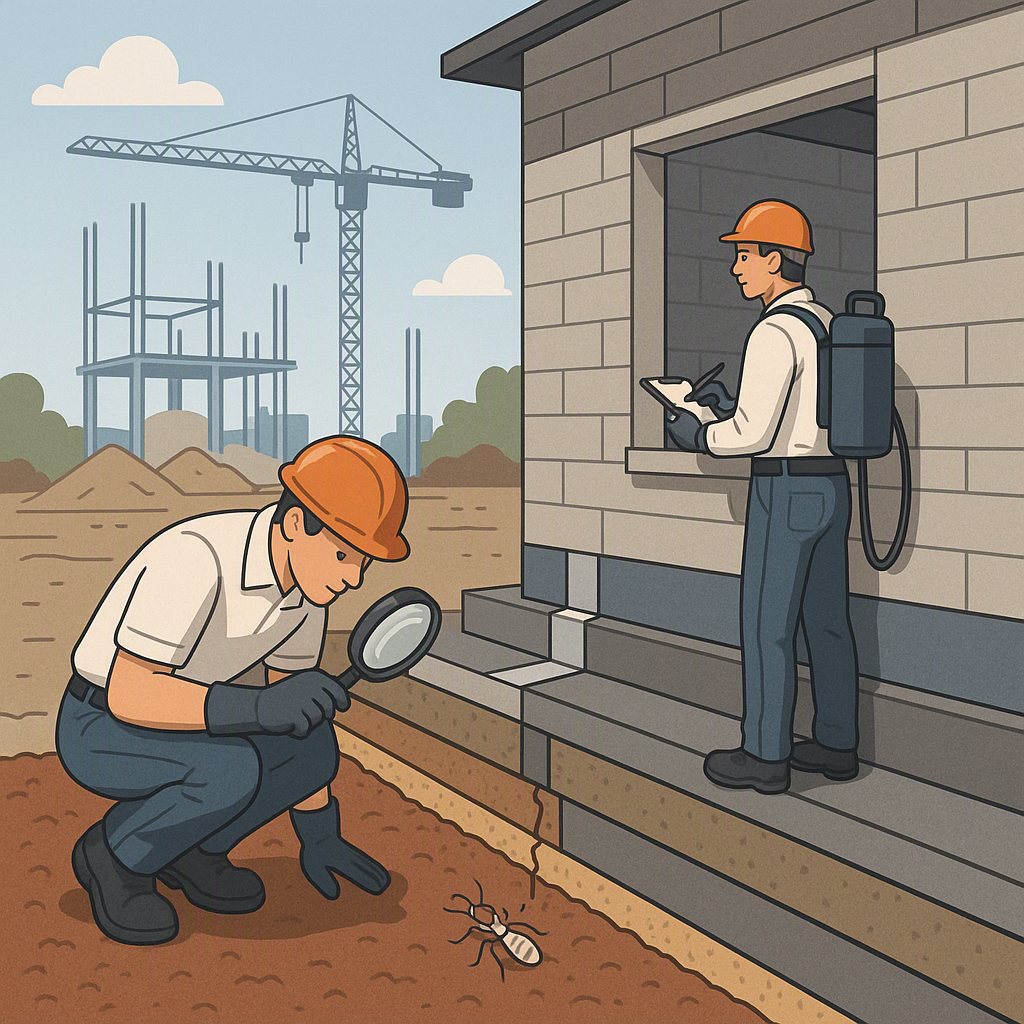
Inspection is crucial. Without it, you’re just guessing at the problem’s source. Companies that skip this step often miss key infestation points, leaving colonies untouched and ready to resurface.
Actionable Steps:
- Always insist on a thorough inspection before any treatment begins.
- Ask if their inspection includes advanced tools for identifying colonies in hidden areas.
- Confirm that their technicians are trained to identify signs of infestation beyond the obvious.
What Changed My Perspective
A conversation with a construction manager in Muscat opened my eyes. He was frustrated because a building he’d worked on had developed a termite problem just two years after completion. The pest control company they’d hired had treated only the surface soil, not the deeper layers where termite colonies live. It was a classic case of cutting corners.
Since then, I’ve made it a point to ask detailed questions whenever I work with pest control services. Do they inspect first? Are their treatments customized? Do they offer a warranty? These questions are non-negotiable.
Comparison Table: Choosing the Right Pest Control Company
| Criteria | What to Look For | Red Flags |
|---|---|---|
| Specialization in Termites | Expertise in termite treatments | General pest control only |
| Long-Term Solutions | Warranty of 5–10 years | No warranty or guarantees |
| Integrated Pest Management (IPM) | Preventative and eco-friendly approach | Heavy reliance on chemicals |
| Construction Experience | Pre-construction soil treatments | Lack of experience with developers |
| Local Knowledge | Tailored methods for regional climates | Generic treatments |
FAQ: What You Should Ask Any Pest Control Company
1. Do they inspect first?
Inspection is non-negotiable. Without it, you’re just guessing where the problem is.
2. Do they offer a warranty?
If they don’t stand behind their work, why should you trust it? Ask about the length and terms of their warranty.
3. What’s their experience with termites specifically?
General pest control isn’t enough. Termites require specialized methods that target colonies, not just visible damage.
4. Do they customize their treatment plans?
One-size-fits-all solutions don’t work in pest control. Termite treatments should be tailored to your property.
5. Are they familiar with local conditions?
A company with local experience will understand the unique challenges posed by your region’s climate and soil.
The Bottom Line
Not all pest control companies are equal. Some will fix the problem for good, and others will just give you a false sense of security. The key is asking the right questions and looking for a company that focuses on long-term solutions, not quick fixes.
If you’re dealing with termites—or want to make sure your new construction project is protected—we can help. Get started with a free inspection today →.